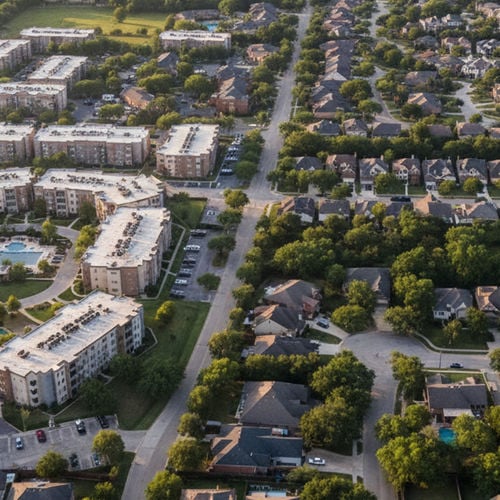


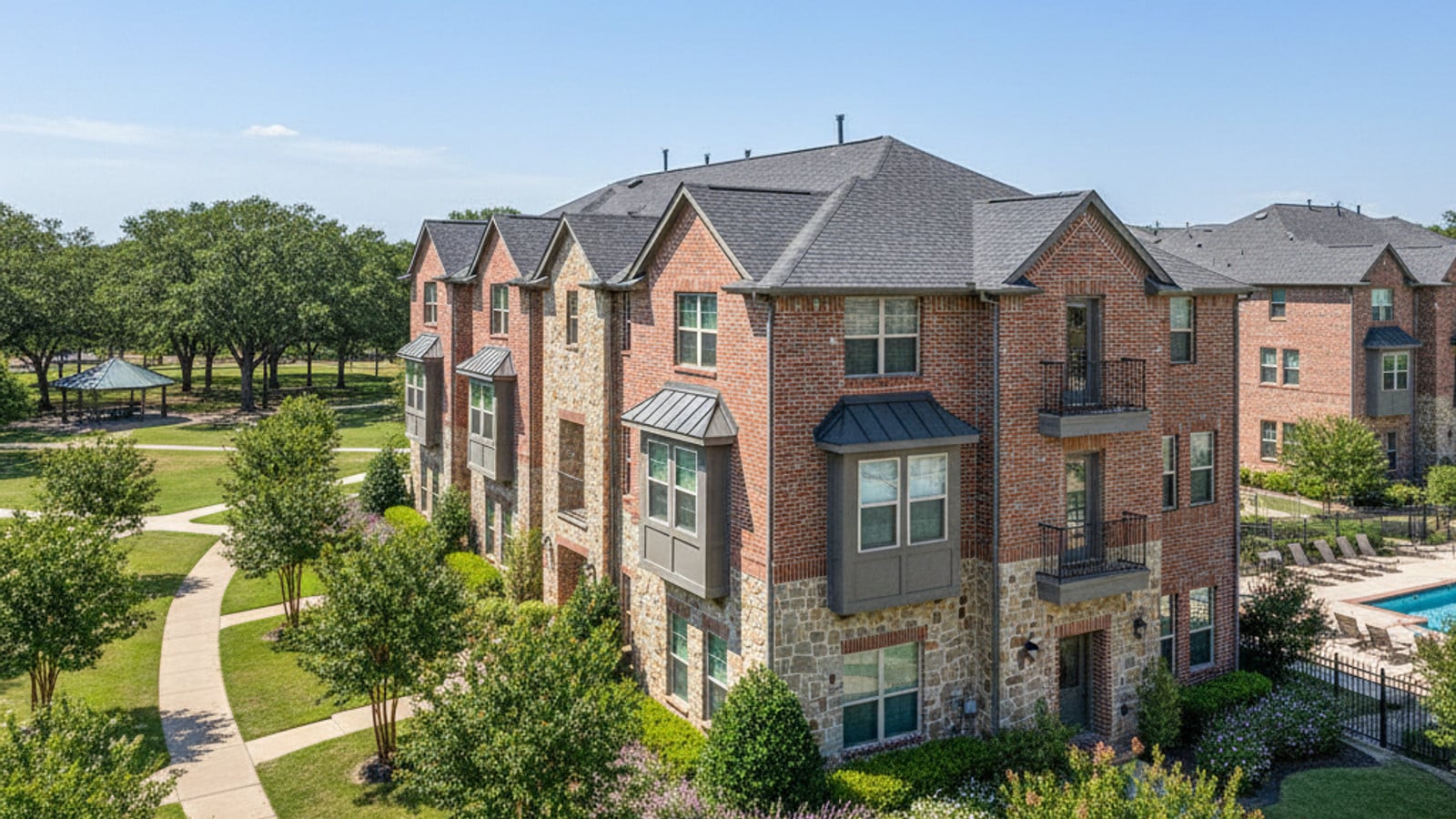
Buyers looking at real estate in Tarrant County quickly learn that association dues vary wildly from street to street. A townhome near the local TEXRail station carries very different monthly carrying costs than a detached house near Green Valley Park. As the Dallas-Fort Worth metroplex expands, higher-density developments with shared amenities are becoming more common.
Factoring these assessments into your housing budget is a standard part of purchasing a property here. HOA Fees in North Richland Hills, TX, range from small annual payments for basic common area maintenance to substantial monthly charges for extensive exterior upkeep. Understanding the local property owners associations helps buyers avoid surprise expenses after closing.
Typical Monthly and Annual Dues in the Area
Across Texas, average homeowners association dues run between $200 and $300 per month for communities with standard amenities. North Richland Hills, TX, mirrors this state baseline, though specific costs depend entirely on the neighborhood's age and infrastructure. Older subdivisions often maintain lower fees but may lack the reserve funds needed for major neighborhood repairs.
Every homeowners association operates under specific governing documents and recorded deed restrictions. These legal frameworks dictate exactly how the board calculates assessment amounts and what reserve funds they must maintain. Buyers can verify an association's management company through records the Texas Real Estate Commission maintains, ensuring the organization is properly registered.
Services and Amenities Funded by Your Dues
A $300 monthly payment in a condominium complex covers vastly different items than a $300 annual payment in a detached subdivision. The POA structure means enforcement of architectural standards and compliance with community rules happens alongside physical maintenance.
Buyers should review the specific inclusions for any property before making an offer. A well-funded association prevents sudden out-of-pocket expenses when common elements fail.
Common area maintenance: Upkeep for green spaces, walking trails, and private community pools.
Exterior building care: Master insurance policies and roof replacement for townhome developments.
Administrative costs: Management company fees and legal compliance expenses.
Unexpected repairs can lead to special assessments if the regular dues do not adequately fund the reserve account. Buyers should review the association's financial health during the option period to avoid inheriting a depleted reserve fund.
Purchasing a home in these communities also involves upfront transaction costs. Buyers must pay a resale certificate fee, which averages around $375 locally, to transfer the property records and verify the account balance.
How Property Types Change Your Monthly Costs
Single-family detached homes in North Richland Hills, TX, typically charge between $200 and $800 annually. The owners of these standalone properties handle their own exterior maintenance, lawn care, and structural insurance.
Townhomes and condominiums shift much of that maintenance burden to the association, resulting in monthly dues ranging from $220 to $400. Texas Property Code Chapter 209 governs how these property owners associations collect assessment amounts and handle owner-occupied units versus rentals.
Mortgage lenders scrutinize these property owners associations just as closely as they evaluate the buyer's credit. If an attached housing complex has too many rental units or pending litigation, lenders may refuse to finance the property entirely.
Dues in the Home Town and City Point Neighborhoods
The Home Town North Richland Hills Residential Association oversees a large planned development where median property prices hover around $500,000. This community features extensive parks, architectural standards, and close proximity to Birdville Independent School District campuses. The neighborhood was designed to replicate a traditional town center, complete with lakes and tree-lined sidewalks.
Townhome owners in Home Town pay monthly fees ranging from $320 to $410 to cover exterior maintenance and shared amenities. Owners of single-family homes in the same development pay their dues on a quarterly schedule. The separate fee structures ensure residents only pay for the services their specific property type requires.
The newer City Point NRH Residential community offers a different fee structure for its residents. Townhome dues here run about $255 monthly and provide access to a future resort-style pool. Buyers or sellers must order a resale certificate during the purchase process to verify the management company details and current assessment amounts for either neighborhood.
Factoring Commutes and Taxes into Your Budget
Property taxes in Tarrant County combine with association dues to form the total carrying cost of North Richland Hills real estate. Buyers should calculate these combined monthly obligations before locking in a mortgage pre-approval. Texas property taxes are assessed annually, and adding a monthly association payment can alter a buyer's debt-to-income ratio.
Location within the city directly influences daily transportation costs. Neighborhoods near the TEXRail commuter line offer direct transit to downtown Fort Worth and DFW International Airport. Reducing daily driving expenses can help offset the cost of higher association assessments.
Access to local city amenities like Green Valley Park provides outdoor recreation options that supplement private community features. Buyers should weigh the cost of private neighborhood amenities against the free public infrastructure available just down the street.
Frequently Asked Questions
How much is the HOA fee per year in North Richland Hills, TX?
Annual costs range from $200 to over $4,800 depending entirely on the housing style. Detached houses generally stay under $800 a year, while attached townhomes easily exceed $3,000 annually due to exterior insurance policies.
Does Texas have mandatory HOA fees?
Yes, if a property is deed-restricted within a legally formed association, paying the assessments is a legal requirement. Failure to pay these mandatory dues can result in fines, property liens, or even a foreclosure lawsuit under state law.
Can you refuse to join an HOA in Texas?
Buyers cannot opt out of an established association when purchasing a home within its boundaries. The recorded deed restrictions attach to the land itself, meaning the obligation transfers automatically to the new owner at closing.
What do HOA fees typically cover in North Richland Hills, TX?
Most baseline assessments pay for landscaping at neighborhood entrances and liability insurance for shared spaces. Higher-tier payments fund community pools, private walking trails, and structural maintenance for attached housing developments.
Check out this article next