

North Richland Hills offers a practical balance of municipal services and residential convenience for homeowners looking to reduce their square footage. Maintaining a large property in the Dallas-Fort Worth metroplex often means spending weekends on yard upkeep and paying to cool empty rooms during the Texas summer. Moving to a smaller footprint directly cuts those ongoing utility bills and frees up your schedule.
The local real estate market provides plenty of options for buyers seeking less upkeep without leaving Tarrant County. From newer townhome developments to established single-story homes, the housing inventory supports a streamlined lifestyle. Understanding the local pricing, tax exemptions, and available amenities makes the transition to a smaller property straightforward.
Financial Advantages of a Smaller Footprint
A smaller home in Tarrant County directly translates to lower monthly utility costs. Cooling a 1,500-square-foot townhome through August requires a fraction of the electricity needed for a 3,000-square-foot two-story house. Heating costs during the winter months also drop proportionally when you have fewer rooms to maintain.
Beyond the electric bill, reducing your lot size eliminates the constant demand for landscaping, irrigation repairs, and exterior maintenance. Homeowners who move into managed subdivisions often shift these responsibilities to a homeowners association. Property insurance premiums also typically decrease when you insure a structure with a lower replacement cost.
Housing Styles and Current Pricing
The median home value across North Richland Hills sits at roughly $340,956 as of early 2026. Buyers looking to reduce their living space can find a variety of lower-maintenance properties that fall near or below this median price point. The inventory includes a mix of attached housing and detached single-family options.
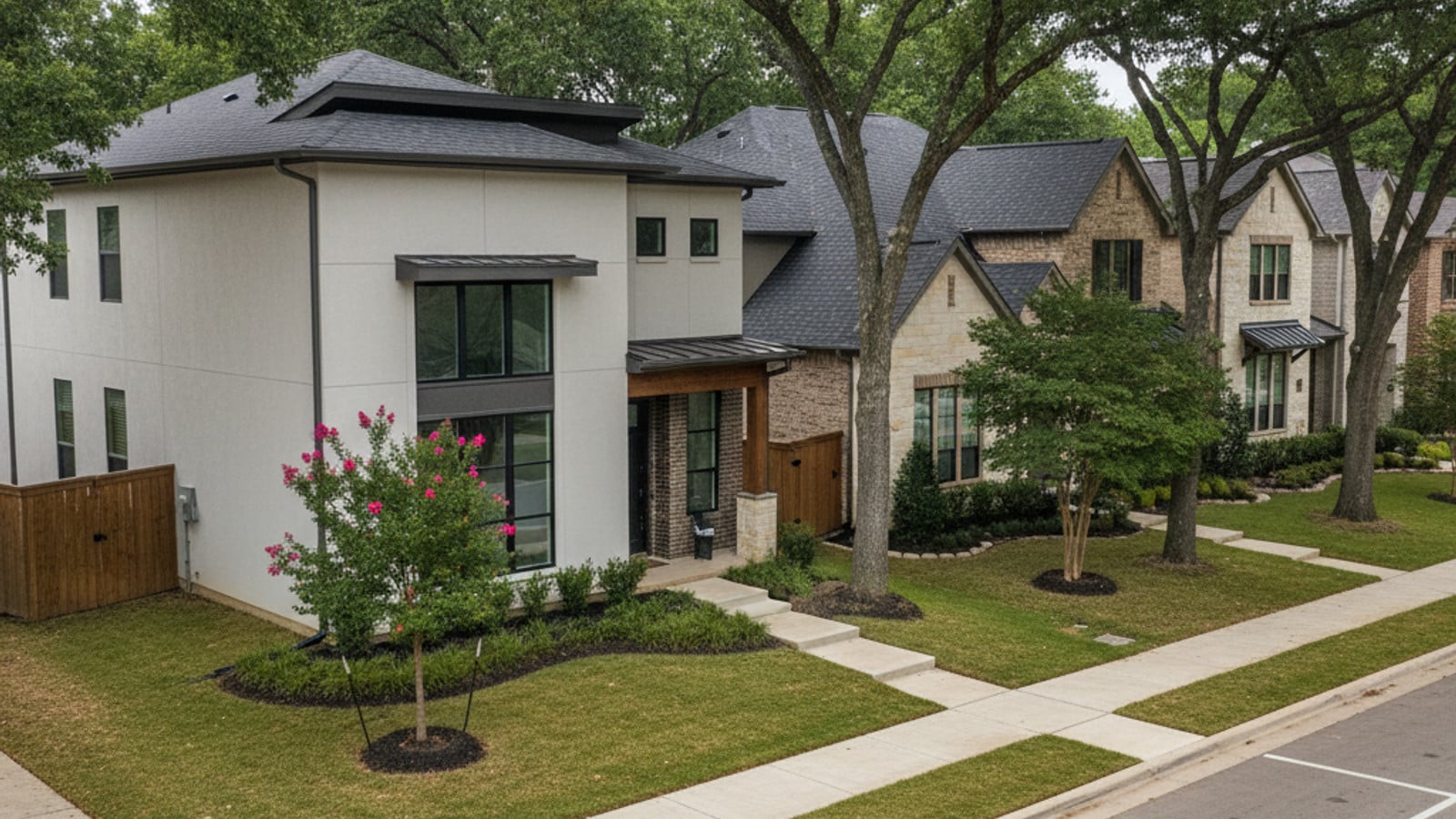
New construction townhomes in the area currently average around $207 per square foot. These properties typically feature modern layouts with the primary bedroom on the first floor, which appeals to buyers planning for long-term accessibility.
Neighborhoods to Consider
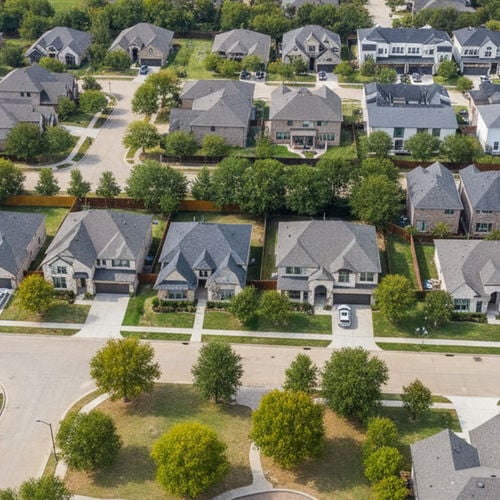
Developments like HomeTown offer walkable street layouts and continuous sidewalk access. This specific subdivision integrates residential blocks with green spaces, making it easy to reach local parks on foot. The planned nature of these communities often includes shared maintenance agreements that cover front-yard landscaping.
Buyers can also explore established single-story homes in older subdivisions throughout the city. These properties often feature mature trees and smaller, manageable lots that require less weekend yard work than large acreage. Older homes frequently offer the benefit of established neighborhoods with no active homeowners association fees.
Local Property Taxes and Exemptions
The city property tax rate for the 2025-2026 fiscal year is $0.497841 per $100 of assessed valuation. Understanding how local exemptions apply to this rate is a standard part of budgeting for your next purchase. Texas does not have a state income tax, so local entities rely on property taxes to fund municipal services.
North Richland Hills offers a 20% homestead exemption for residents who use the property as their primary home. This municipal exemption lowers the taxable value of the house, which directly reduces your annual tax bill. Buyers should file for this exemption through the Tarrant Appraisal District as soon as they close on their new property.
The city also provides a specific $36,000 exemption for senior citizens and disabled residents. Qualifying homeowners can also take advantage of a tax freeze, which locks in the city tax amount and protects against future rate increases. This freeze provides predictable housing costs for buyers living on fixed incomes.
Transit Access and Major Highways
Commuters in North Richland Hills have direct access to Loop 820, which connects to the broader Dallas-Fort Worth highway network. Reaching Dallas, Fort Worth, or the airport takes less time when your home sits near these primary arteries. The central location within the metroplex cuts down on cross-town driving.
The city also benefits from the TEXRail transit system, which provides a scheduled rail connection across the region. This line runs directly into downtown Fort Worth and out to DFW Airport, offering an alternative to highway driving. The airport is located roughly 15 miles away, making travel straightforward.
Local Train Stations
Two specific stations serve the city: the Iron Horse Station near Loop 820 and the Smithfield Station. Both locations feature dedicated parking lots for daily commuters and well-lit waiting areas.
Using these stations allows residents to bypass rush-hour traffic on Interstate 35W and Airport Freeway. The regular train schedule makes it a practical option for reaching regional entertainment districts or catching a morning flight without paying for airport parking.
Medical Centers and Healthcare Options
Medical City North Hills operates as the primary hospital within the city limits. Located centrally at 4401 Booth Calloway Road, this facility is easily accessible from most local residential subdivisions. The central placement means emergency services are never far away.
The hospital provides a full range of medical care, including a dedicated emergency room, surgical services, and specialized internal medicine departments. Having these comprehensive services minutes from home adds a layer of practical convenience for residents.
In addition to the main hospital, the surrounding commercial corridors host numerous private clinics, dental offices, and physical therapy centers. Urgent care facilities operate along major roads like Rufe Snow Drive to handle minor injuries after standard business hours. Buyers should map the distance from prospective homes to their preferred medical providers to ensure a manageable drive.
Local Recreation and City Amenities
The NRH Centre serves as the primary municipal hub for fitness and indoor recreation. This facility offers an indoor track, strength equipment, and a pool, providing a year-round option for exercise regardless of the Texas weather. The center also hosts community classes and wellness programs.
Outdoor recreation is equally accessible throughout the city limits. The Iron Horse Golf Course provides a well-maintained public course right in the middle of town. Residents also utilize the Cotton Belt Trail, a paved multi-use path that runs alongside the TEXRail line for walking and cycling.
Daily errands are straightforward due to the distribution of commercial centers and retail plazas. Most subdivisions sit within a short drive of major grocery stores, pharmacies, and hardware stores. The North Richland Hills Library provides another local resource with extensive digital catalogs and public meeting spaces.
How to Prepare Your Current Home for Sale
Sorting through years of belongings is the most time-consuming phase of moving to a smaller house. Starting this process early prevents a rush when it is time to list your current property. You can utilize local estate sale companies or donation centers to clear out items you no longer need.
You should measure the rooms in your prospective new home to determine which large furniture pieces will fit. Items that are too large for a townhome or condo can be sold, donated, or given to relatives. Securing moving boxes and scheduling local movers months in advance ensures you get your preferred dates.
Before making any major updates to your current house, you should consult a local real estate professional to review 2026 home values. They can tell you which minor repairs will yield a return and which expensive renovations you should skip. A fresh coat of paint and professional cleaning often do more for a sale than a full kitchen remodel.
Frequently Asked Questions
What is the median price of a townhome in North Richland Hills?
Townhomes in the area generally range from $300,000 to over $400,000 as of early 2026. The exact price depends on the specific subdivision, square footage, and proximity to amenities like the Cotton Belt Trail.
Are there property tax exemptions available in North Richland Hills?
Yes, the city provides a 20% homestead exemption for primary residences. Homeowners aged 65 and older, or those with qualifying disabilities, can also apply for a $36,000 exemption and a local tax freeze.
What are the main transit options in North Richland Hills?
Most residents drive via Loop 820 to access the broader DFW area. For public transit, the TEXRail line stops at the Iron Horse and Smithfield stations, providing scheduled service to downtown Fort Worth and DFW Airport.
Check out this article next