


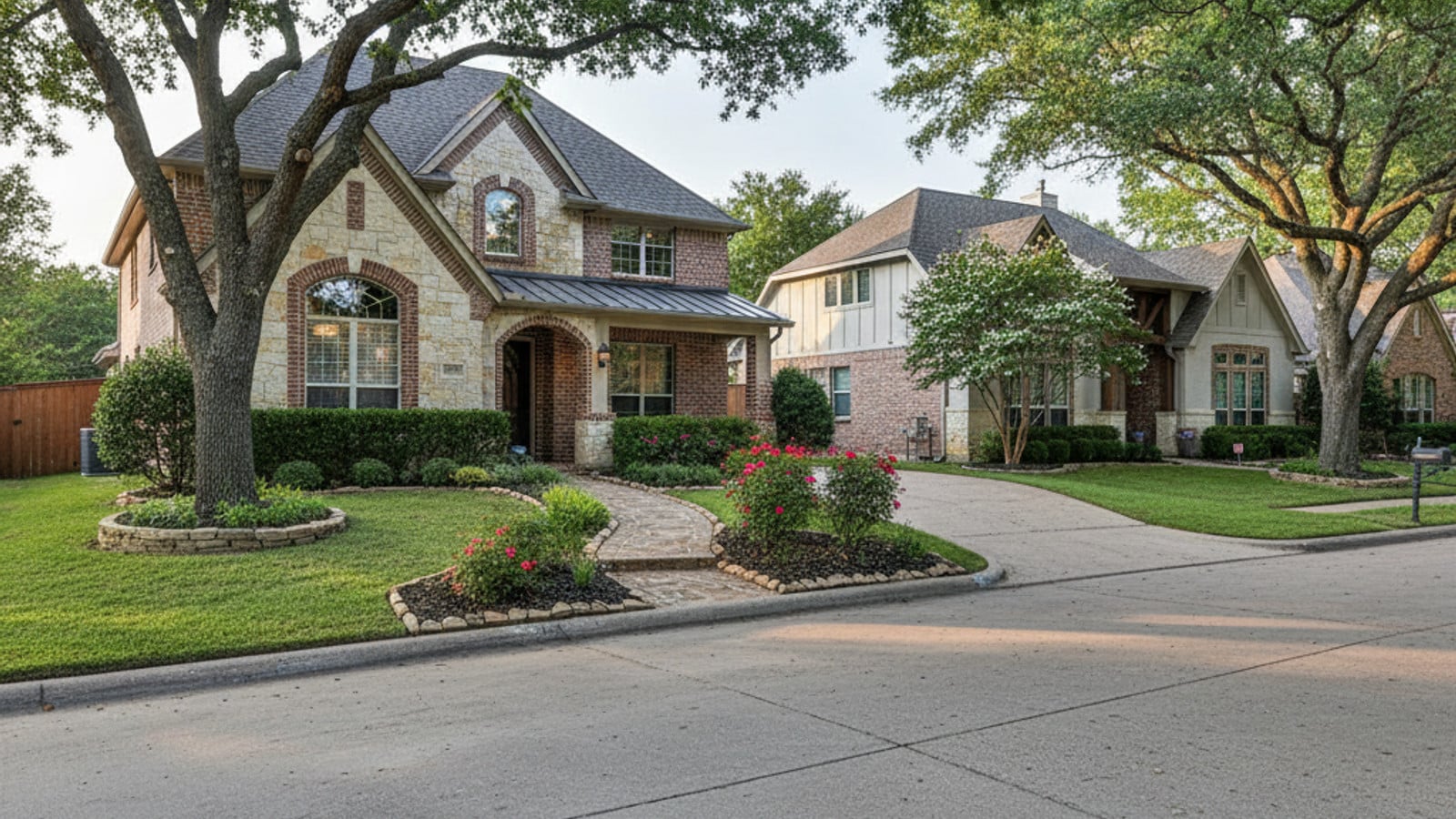
The median home value in the city sits around $340,000, making Property Taxes in North Richland Hills, TX a major part of the monthly housing budget. Homeowners here pay taxes to several different entities, including the municipal government, Tarrant County, and local school districts.
The City of North Richland Hills adopted a property tax rate of $0.497841 per $100 of valuation for the 2026 fiscal year. This figure represents a decrease from the no-new-revenue rate, an adjustment made by the city council to help offset rising home appraisals across the Dallas-Fort Worth metroplex.
Breaking Down the Local Taxing Entities
The city tax rate only makes up about one-quarter of a typical homeowner's total tax bill. The Tarrant County Tax Assessor-Collector gathers funds on behalf of several different jurisdictions at once.
For 2026, the Tarrant County rate is $0.1862 per $100 of assessed value. Property owners also support the JPS Health Network at $0.1650 per $100 and Tarrant County College at $0.11228 per $100.
Birdville ISD vs. Keller ISD Tax Rates
Public school districts take up the largest share of the overall property tax burden in Tarrant County. A home's zip code determines which school district jurisdiction applies to the property.
Most homes in the southern and central parts of the city fall within the Birdville Independent School District, which levies a rate of approximately $1.1865 per $100 of valuation. Properties further north typically route to the Keller Independent School District, where the rate sits around $1.0852 per $100.
How Exemptions Lower Your Taxable Value
Texas law allows local taxing units to offer exemptions that reduce a property's assessed value before taxes are calculated. The City of North Richland Hills grants a 20 percent local homestead exemption, which is the maximum amount permitted by state legislation.
Filing for a homestead exemption also places a 10 percent cap on how much the taxable value of the home can increase from one year to the next. Several specialized exemptions exist for specific homeowner groups:
Standard Homestead Exemption: Removes 20 percent of the home's appraised value from the city's tax calculation.
Over-65 Exemption: Provides an additional $36,000 reduction in taxable value for residents aged 65 and older.
Disabled Person Exemption: Matches the $36,000 reduction for qualifying disabled homeowners.
Senior Tax Freeze: Locks in the maximum city tax amount a homeowner will pay once they turn 65, ensuring the city tax bill never exceeds that baseline in future years.
Calculating Your Estimated Annual Bill
A homeowner with a property appraised at the local median of $340,000 will first subtract their exemptions to find the taxable value. Applying the city's 20 percent homestead exemption removes $68,000 from the equation right away.
This leaves a taxable value of $272,000 for the city portion of the bill. To find the exact dollar amount owed to the city, you divide that taxable value by 100 and multiply it by the city rate of $0.497841.
In this scenario, the city portion of the tax bill comes out to roughly $1,354 for the year. Buyers should perform this same math using the specific school district, county, and hospital rates to estimate their total annual tax liability.
How to Protest Your Assessed Value
The Tarrant Appraisal District determines the market value of every property in the county as of January 1 each year. Homeowners generally receive their new notice of appraised value in the mail by early April.
If the county's assessment seems higher than recent comparable sales in the neighborhood, property owners have the right to file a formal protest. The deadline to submit this appeal is May 15, or 30 days after receiving the official notice, whichever date is later.
Successful protests often rely on specific data, such as closing statements from nearby properties or estimates for major repairs the home needs. Lowering the assessed value through a protest directly reduces the final tax bill issued in the fall.
Frequently Asked Questions
How much are property taxes on a $350,000 house in North Richland Hills?
Without a homestead exemption, a $350,000 house in the Birdville ISD zone generates a total tax bill of roughly $7,500. This estimate combines the city, county, hospital, college, and school district rates for 2026. Applying for a homestead exemption will lower this total by reducing the taxable value across several of those jurisdictions.
When are property taxes due in North Richland Hills, Texas?
The Tarrant County Tax Assessor-Collector mails tax bills in October of each year. Homeowners must pay these bills in full by January 31 of the following year to avoid penalties. Accounts that remain unpaid on February 1 immediately begin accruing interest and collection fees.
Can I protest my property value in North Richland Hills, TX?
Yes, any homeowner can appeal their valuation through the Tarrant Appraisal District portal. You should gather photos of unaddressed property damage or recent neighborhood sales data to support your case. The appraisal review board will schedule a hearing to review the evidence before finalizing the year's tax roll.
Check out this article next